






Currency converter for all national currency is given on this page.
You can enter any arbitrary amount of currencies below. Rates are updated daily by Swiss National Bank.
In first drop down menu choose EUR, USD, JEAN.
Enter the unit of currency for which you are interested.
In second choose USA Dollars (USD) or some other. If you enter 1 EUR for example, you will receive its equivalent in Dollars, Dinars, Japanese Jean, Rubles etc.
Currency converter calculators for for all national currency today is:
In finance, the exchange rates (also known as the foreign-exchange rate, forex rate or FX rate) between two currencies specifies how much one currency is worth in terms of the other. It is the value of a foreign nation’s currency in terms of the home nation’s currency.
Currency exchange converter is on line tool for easy calculations. It is very intuitive tool with fast adopting. Value of all currencies is updated on daily level and guaranty for this is Google gadget page. For more information you can use official daily rate for each country, because each country has own lows.
For example, an exchange rate of 100 European euro (EUR) to the USD Dollars (USD) means that 137.5 U.S. dollars is worth the same as EUR 100. The foreign exchange market is one of the largest markets in the world.
By some estimates, about 3.2 trillion USD worth of currency changes hands every day. The spot exchange rate refers to the current exchange rate. The forward exchange rate refers to an exchange rate that is quoted and traded today but for delivery and payment on a specific future date.
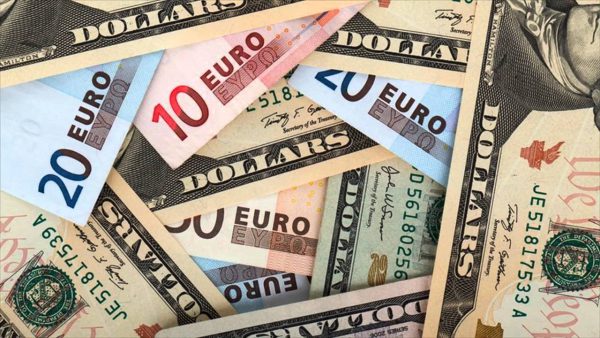
If a currency is free floating, its exchange rate is allowed to vary against that of other currencies (up and down) and is determined by the market forces of supply and demand. Exchange rates for such currencies are likely to change almost constantly as quoted on financial markets, mainly by banks, around the world. A movable or adjustable peg system is a system of fixed exchange rates, but with a provision for the devaluation of a currency.
As of November 2008, with more than €751 billion in circulation. Converted at exchange rate for 2016-12-26 of EUR 1 = USD 1.04 – “Historic exchange rates”. Retrieved on 1 January 2009., the euro is the currency with the highest combined value of cash in circulation in the world, having surpassed the U.S. dollar. Based on IMF estimates of 2008 GDP and purchasing power parity among the various currencies, the Euro zone is the second largest economy in the world.
There is a market convention that determines which is the base currency and which is the term currency. In most parts of the world, the order is: EUR – GBP – AUD – NZD – USD – others.
Thus if you are doing a conversion from EUR into AUD, EUR is the base currency, AUD is the term currency and the exchange rate tells you how many Australian dollars you would pay or receive for 1 euro. Cyprus and Malta which were quoted as the base to the USD and others were recently removed from this list when they joined the euro. In some areas of Europe and in the non-professional market in the UK, EUR and GBP are reversed so that GBP is quoted as the base currency to the euro. In order to determine which is the base currency where both currencies are not listed (i.e. both are “other”), market convention is to use the base currency which gives an exchange rate greater than 1.000. This avoids rounding issues and exchange rates being quoted to more than 4 decimal places. There are some exceptions to this rule e.g. the Japanese often quote their currency as the base to other currencies.