






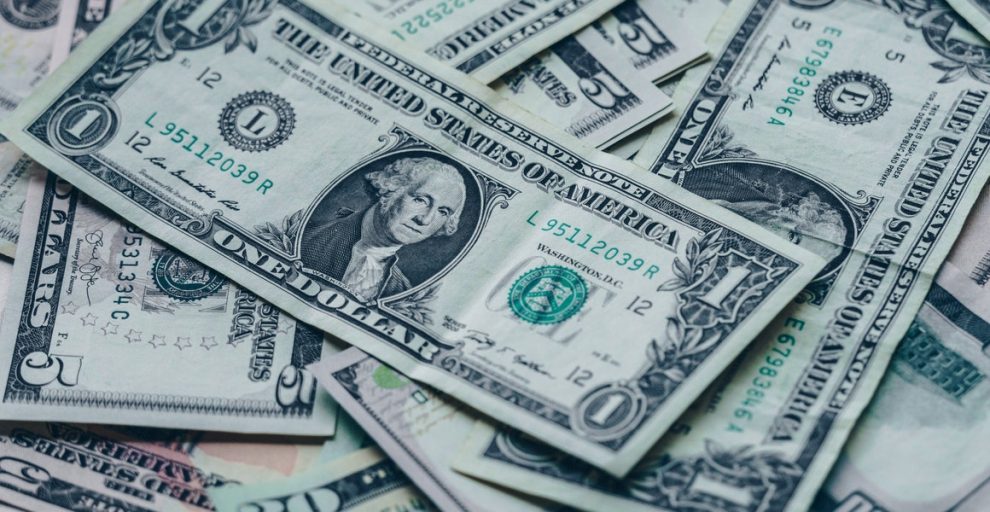
Exchange daily course between Australian Dollar (AUD) and USA Dollars (USD) is given on this page.
In first drop down menu choose Australian Dollar (AUD). In second choose USA Dollar (USD). If you enter 1 Australian Dollar (AUD) for example, you will receive its equivalent in USA Dollars (USD), Euros, turkish Liras, Dinars, Japanese Jean, Rubles etc.
You can enter any arbitrary amount of currencies below. Rates are updated daily by Swiss National Bank.
Date: Wednesday 10th of June 2026 11:45:21 PM
You can also convert USA Dollars to Australian Dollar (AUD). Insert values of USA Dollars, find than opposite values for Australian Dollars, or Euros, in second row and automatically you will get calculated value of another banknotes. The currency data are updated daily. We hope that ratio will be optimal for your business. Enjoy in work and calculations!
The Australian dollar
The Australian dollar (sign: $; code: AUD) is the currency of the Commonwealth of Australia, including Christmas Island, Cocos (Keeling) Islands, and Norfolk Island, as well as the independent Pacific Island states of Kiribati, Nauru and Tuvalu. Within Australia it is almost always abbreviated with the dollar sign ($), with A$ or AU$ sometimes used informally to distinguish it from other dollar-denominated currencies. It is subdivided into 100 cents.
The Australian dollar is currently the sixth-most-traded currency in the world foreign exchange markets, (behind the US dollar, the euro, the yen, the pound sterling, and the swiss franc), accounting for over 6% of worldwide foreign-exchange transactions.
The Australian dollar was popular with currency traders due to high interest rates in Australia (but within the last year there has been a gradual decrease in the IR to 3.25% in October 2009), the relative freedom of the foreign exchange market from government intervention, the general stability of Australia’s economy and political system, and the prevailing view that the Australian dollar offers diversification benefits in a portfolio containing the major world currencies, especially because of its greater exposure to Asian economies and the commodities cycle.
In 1966, The Australian dollar coins were introduced in denominations of 1, 2, 5, 10, 20 and 50 cents. The initial 50 cent coins contained high silver content and were withdrawn after a year due to the growing intrinsic value of the silver content. One-dollar coins were introduced in 1984, followed by two-dollar coins in 1988.
The one- and two-cent coins were discontinued in 1991 and withdrawn from circulation. In commemoration of the 40th anniversary of decimal currency, the 2006 mint proof and uncirculated sets included one- and two-cent coins. Cash transactions are rounded to the nearest five cents. As with most public changes to currency systems, there has been a great amount of seignorage of the discontinued coins. All coins portray the head of state, Queen Elizabeth II, on the obverse, and are produced by the Royal Australian Mint.
Value of the Australian dollar
In 1966, when the Australian dollar was introduced, the International gold standard was still in operation. The dollar was at that time worth 980 mg of gold. As of February 2008 the dollar was worth 30 mg of gold. On 8 December 1983, the Australian dollar was floated, allowing its value to fluctuate dependent on supply and demand on international money markets.
In the two decades following the floating of the Australian dollar, its highest value relative to the US dollar was 96.68 US cents on 18 March 1984. The Australian dollar returned to 96 US cents in June 2008, and subsequently rose to a new post-float high of 98.49 US cents on 15 July 2008. The lowest value of the Australian dollar after it was floated was 47.75 US cents in April 2001.
Value of the Australian Dollar (Official currency code is AUD) is a commodity dominated currency and is at present, the sixth most traded in the world foreign exchange markets behind the US. Dollar, Euro, Japanese Yen, British Pound and the Swiss Franc. The Australian Dollar has been the official currency of the Commonwealth of Australia since February 14th, 1966.
Recommendation
-
Recommendation:




Add Comment